
Of course all you REENO Aviators know all the details of the fuel system of the plane. So, please correct all my mistakes as you read along.
The fuel system in the plane is a gravity fed system with an electric auxiliary fuel pump to prime, and an engine driven fuel pump that sucks the fuel into the fuel manifold over the cylinders and to the fuel injectors. The aux pump is not a boost pump and should not be on during take offs etc. The tanks have 26.5 gallons capacity each, so full fuel is 53 gallons usable fuel. Filling it to the bottom of the filler tab is 17.5. This is somewhat inaccurate when the plane is not perfectly level, so allow for a little margin. Both tanks filled to the bottom of the filler neck tab indicates 35 gallons usable.

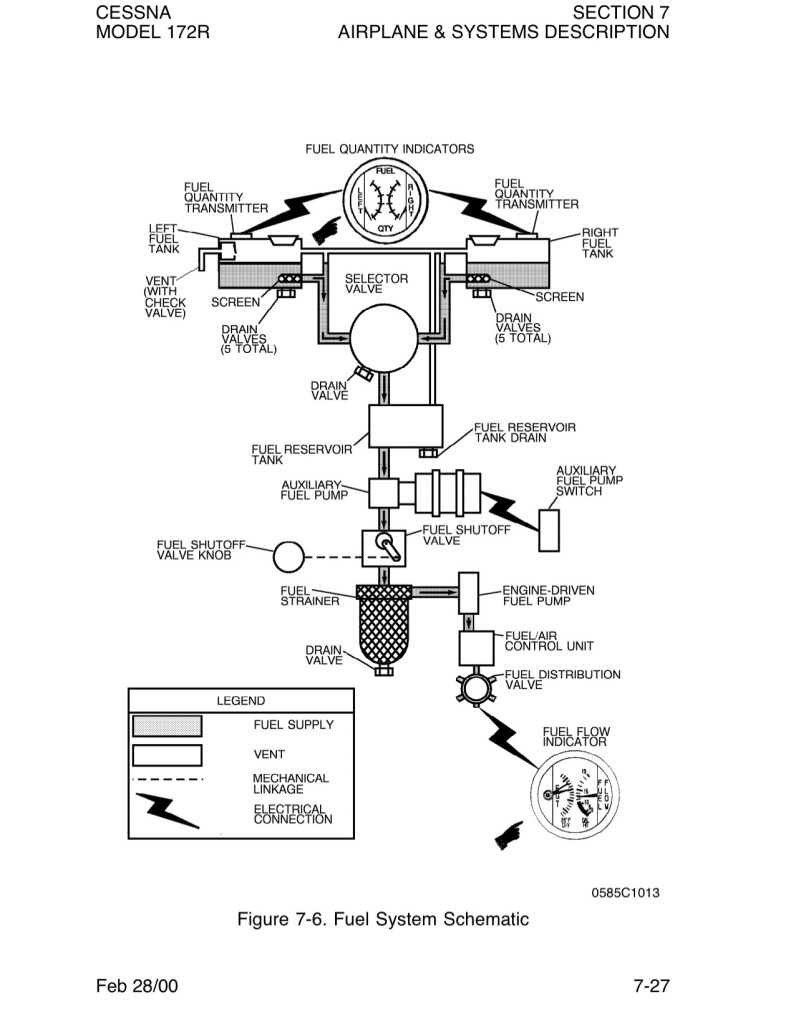
There are 13 sump points or drain valves and all should be checked before flight, although the wing ones may not make a lot of sense in the metal ‘wet wing‘ 172R. It takes only a minute extra to do them all though.
The fuel selector valve is usually in the ‘both’ position in flight. There are some conditions that can create some uneven fuel burn, particularly if the plane is flown with one wing down (gravity) or as a result of some unequal air venting / pressure. Our ‘R’ model has 1 fuel vent on the left wing which connects to both wing tanks. This can cause a bit of ram air to push the fuel out of the left tank preferentially. If a fuel imbalance is noted in straight and level flight, the fuel selector can be moved to the fullest tank until the fuel is even again. You should not ever (never) run one tank dry and then switch to the other, like some people do in low wing fuel systems. Also, make note of the POH warnings about fuel becoming unported (interrupted) if operated during turns or in slips/skids. This condition happens sooner when operating from one tank, or when the tanks are quite empty. Read the section in the POH:


Finally some notes about fueling. We keep the fuel to the tabs. This is done so we have a slightly higher available payload (passenger and luggage etc) in case someone needs that extra for their trip. Now, the ‘tab’ in our plane is the bottom of the filler neck. Below are three pictures. One with too little fuel, one with too much, and one with just the right amount.
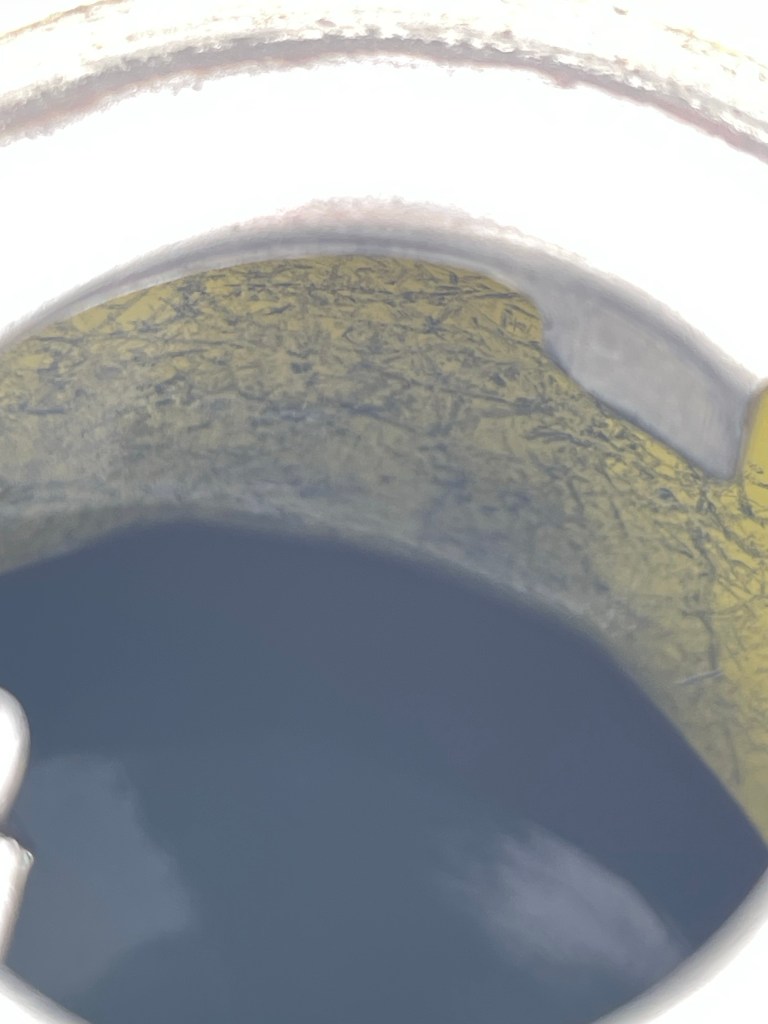

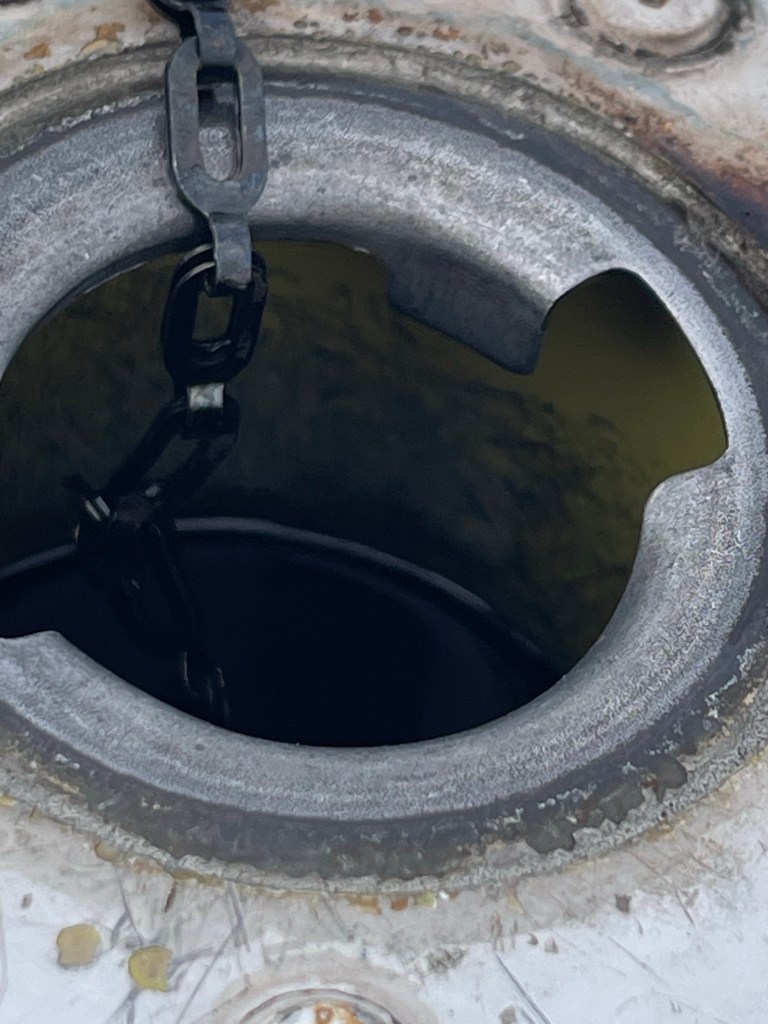
Kind of hard to see, right? Look at the fuel rim on the inside of the semicircular fuel neck to give you a hint. Have some leniency towards your fellow pilots. Nobody intentionally underfills the tanks. And if you feel that way, take it up with the last person that flew, or just add some fuel and realize that next time this might happen to you. Flying is expensive, I know, but none of the club members should quarrel over the cost of a couple of gallons of fuel. Let me know if you notice a significant under (or over) fueling, and I will have a conversation with repeat ‘offenders’. I have not seen this emerge as a pattern in the decade that I have been part of the club.
I think the reason for slight under or over fueling (no complaints about the latter yet. I wonder why…) is that it is just not always easy to see. Particularly in bright sunlight or at night at the fuel pump it is just really hard to see. This is also why you should always check fuel levels before every flight. Use of a fuel straw can help, but make sure it is the right one. A slight angle, or the wrong one for the tank may give you a wildly inaccurate read. The fuel gauges in our plane are quite accurate and could be a good reference as well. Never fly the plane when uncertain about the fuel levels, and don’t skimp on VFR or IFR fuel margins. Just this week in California a Cessna P210 with a 17000 hr ATP rated pilot with type ratings in anything from Boeing 727 to DC3 crashed as he ran out of fuel after a second missed approach after a 4.5 hr flight to his destination. Last radio transmission: ‘I am out of fuel’. Personally, I land before I reach my 1 hr fuel reserve limit.
Lastly, I have made a small video of how you can see the fuel level a bit better while bumping the wing a bit.
Happy fueling and happy flying.
David
 REENO Aviation Flying Club
Leave a comment